
Never miss a dance comp again – sign up for monthly updates
Home > Dance competitions in Australia: The ultimate guide
Dance competitions take place year-round across every state in Australia. They range from local, grassroots eisteddfods to elite national championships, and cover everything from ballet and contemporary to jazz, hip hop, and tap.
Whether you’re in a major city or a regional town, there’s almost always a dance competition happening nearby. For many families, these events are a major part of a dancer’s journey, offering valuable stage time, skill development, and a strong sense of community. But with so many events, it can be hard to keep track of what’s coming up and which dance genres each event covers.
That’s where Stage Lark comes in. Our directory of over 300 event listings helps parents, dancers and teachers quickly find the best competition to meet their needs. The directory is easy to use with filters allowing you to search by state, dance genre, or age group — and it’s updated each month, so you have the latest info at your fingertips.
For a quick look at upcoming events in each state, simply click on the state names below to see a snapshot of what’s on.
Each month, we also highlight new events and updates in our dance competitions blog — helping parents, dancers, and teachers stay on top of the latest opportunities without scrolling through hundreds of listings.
Prefer to have the latest events sent straight to your inbox? Remember to sign up to our newsletter.
Dance competitions, particularly eisteddfods, have a long and cherished history in Australia. Originating from Welsh cultural festivals, eisteddfods were first introduced here in the 19th century and quickly became a popular way for communities to celebrate performance, music, and dance. Today, they remain a backbone of the competitive dance scene, especially in regional areas, offering a welcoming stage for young performers of all levels. See our article on dance eisteddfods for a deeper dive into this world.
Over time, Australia’s dance comp scene has grown dramatically, expanding from grassroots events into a diverse and dynamic national circuit. At the top end of the spectrum are major events like the Sydney Eisteddfod, which began in 1933 and is now one of the largest performing arts competitions in the Southern Hemisphere. Then there are international competitions that travel to Australia, such as the Youth America Grand Prix (YAGP), which offer elite ballet dancers the chance to be seen on a global stage without leaving the country.
Syllabus-based competitions also play a key role. Renowned dance education bodies like the Royal Academy of Dance, Cecchetti Ballet and the Australian Institute of Classical Dance run their own exams and competitions, providing structured opportunities for dancers to showcase syllabus work and earn recognition within classical frameworks.
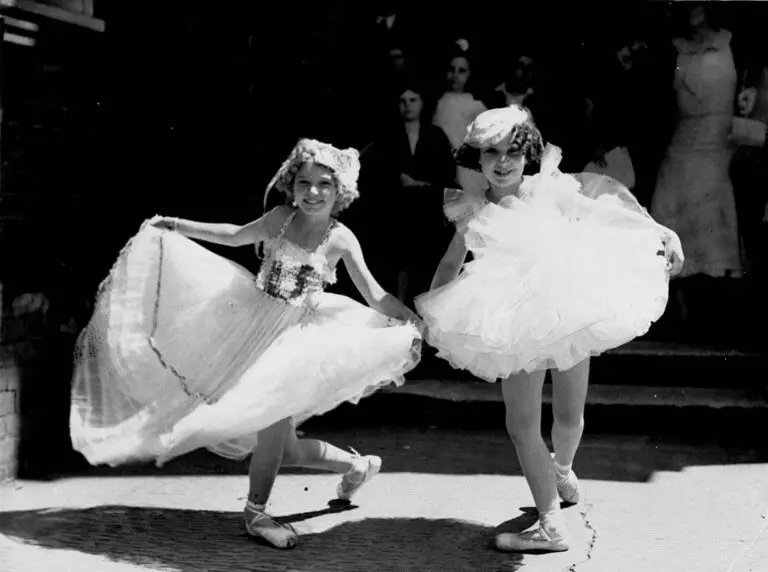
Source: Wikimedia Commons, Sam Hood collection. Railway and Tramway Eisteddfod, NSW – 1934.
There are many reasons families choose to get involved in the dance comp scene. It’s not just about medals and trophies – the developmental benefits are huge and extend well beyond the stage. And for many children, it’s also just fun – the costumes, the stage, and the buzz of backstage energy.
Benefits include:
A great first step is to speak with your child’s dance teacher. They can offer valuable insight into which competitions best suit your child’s age, skill level, and goals. Not all dance competitions are the same, and finding the right fit can make a big difference to your child’s confidence and experience.
Here are some key things to consider when choosing a competition:
If you’re just getting started, a local competition is often a great way to dip your toes in. It can offer a positive first experience without the higher costs or pressure of major events. You can read more in our article on dance eisteddfods, where we share five essential lessons every new dance parent learns.
A lot…especially if your child is doing solos, multiple group dances, or competing at state/national level. Preparation often ramps up one to two months before comp day. And for more advanced dancers, it’s a year-round cycle.
Typical prep includes:
Costs can vary widely depending on how many competitions your child enters and the level of involvement. For some families, expenses stay under a few hundred dollars a year. For others, especially those with solo routines, multiple events, or interstate travel, the total can reach several thousand. If you’re just starting out, local dance competitions are often a more affordable way to get involved without a big financial commitment.
Some of the costs you will want to consider are:
Competition day can be full-on, and as a parent, your job is to be the quiet MVP – juggling many behind-the-scenes tasks like managing transport, scheduling, costumes, helping with hair and make-up, providing emotional support, handling logistics, and encouraging effort over outcome. To keep things running smoothly, it’s essential to label everything clearly, bring music back-ups on a USB stick, and prepare a checklist ahead of time.
Here’s a rough idea of how the day typically unfolds: